A word from the editor
ir. Peter A. Grognard, MSc Aero, VKI Managing Director
In May of 1992, preparing for my year of graduate study in Aeronautics at Caltech, I came across Milton van Dykes’s 1982 classic ‘Album of Fluid Motion’ at Stanford University. In his introduction, Professor van Dyke wrote: “Since 1958, …, I have dreamed of someday assembling a collection of photographs of flow phenomena. To serve its purpose, however, such a collection needs to be inexpensive enough that it is readily accessible to students”. In my case and that of many others around the world, Professor van Dyke’s work definitely served its purpose and will continue to do so for many years.
While my professional life after graduation turned me away from actively practising fluid dynamics for more than 20 years, I regularly kept browsing through Dr. van Dyke’s Album of Fluid Motion whenever I tried to visualize how a particular flow might look like.
In recent years however, the day-to-day management of the von Karman Institute again has given me the opportunity to regularly enjoy the beauty of fluid dynamics and witness the tremendous progress in experimental flow measurements at VKI and elsewhere. It inspired me to think, since 2022, of a new album of fluid motion, that would capture new images, motions, and yes, new insights in complex flow phenomena, easily accessible to today’s students.
For seventy years, the von Karman Institute for Fluid Dynamics has stood as an institution where curiosity meets rigor, where ideas are tested in wind tunnels and numerical simulations, and where generations of researchers have learned to see the invisible structures that shape the motion of fluids. Founded in 1956 with the vision of Theodore von Kármán, the Institute has grown into an internationally renowned scientific community united by a shared commitment to advancing the understanding of complex flows, across scales, across disciplines, and across the boundaries of classical thinking.
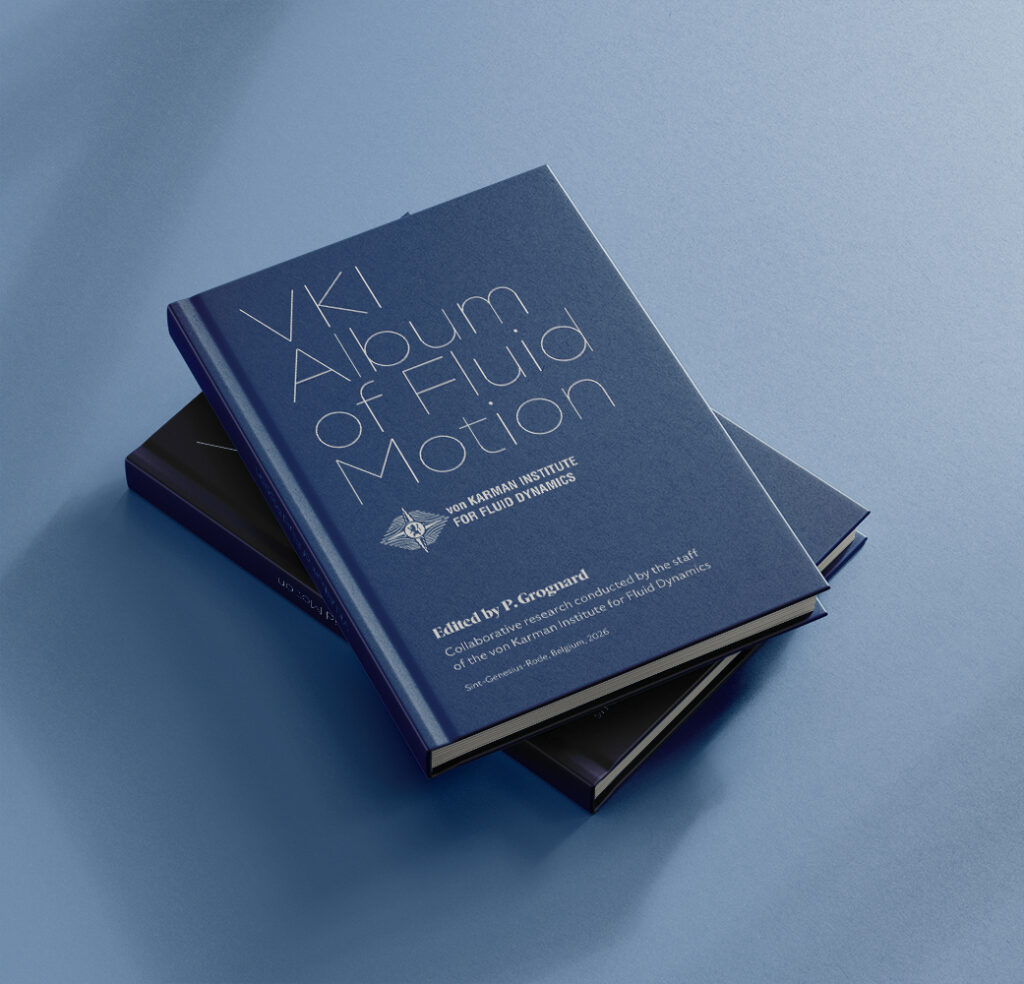
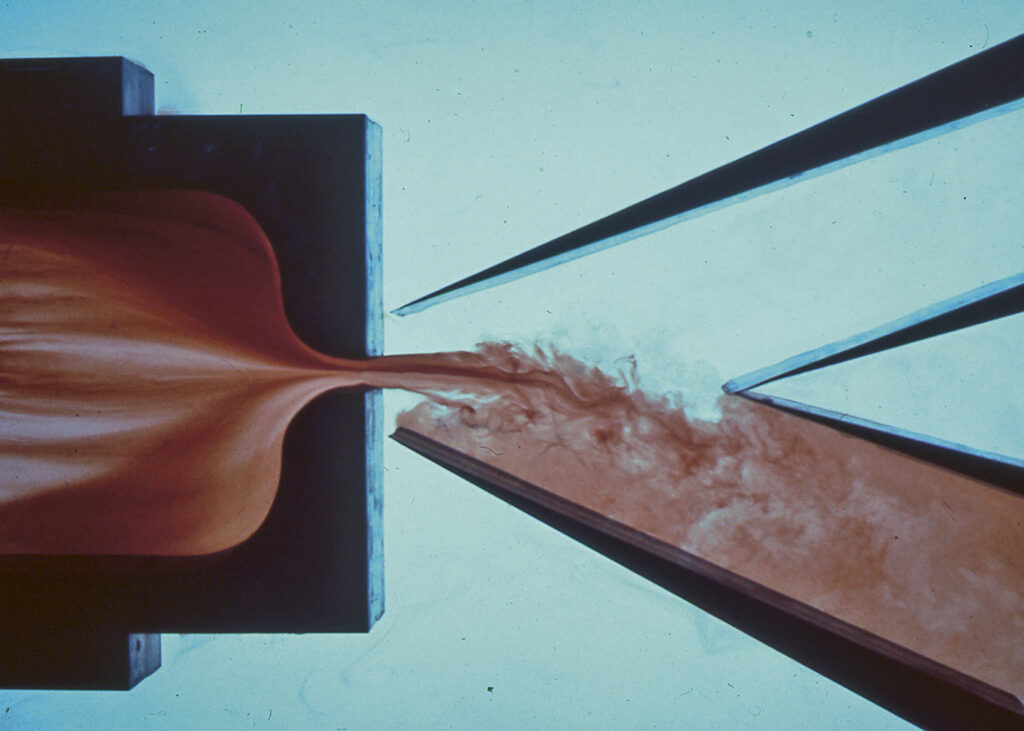
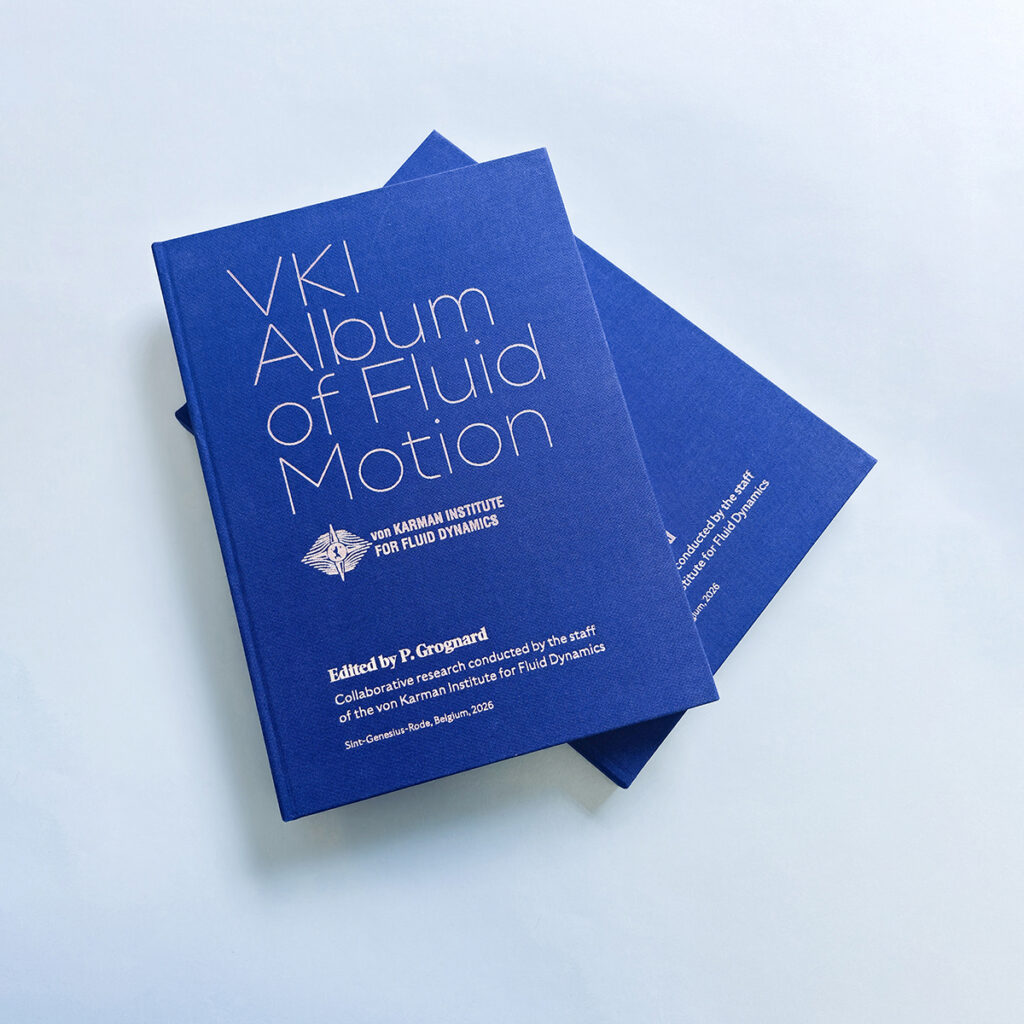
This volume, Album of Fluid Motion, celebrates that legacy. It brings together contributions from the Institute’s faculty and researchers, each chapter reflecting both the depth of VKI’s expertise and the diversity of the flows that animate our world. The topics span the full spectrum of fluid dynamics: from the onset of laminar motion to the richness of turbulence; from the physics of capillarity to the discontinuities of shock waves; from the engineered precision of flow-structure interaction to the slow rhythm of environmental and geophysical systems. In doing so, the book also reminds us that behind every scientific insight lies a form of artistry, the ability to observe, to interpret, and to reveal patterns that are as elegant as they are complex.
The structure of the book mirrors the Institute’s multidisciplinary spirit.
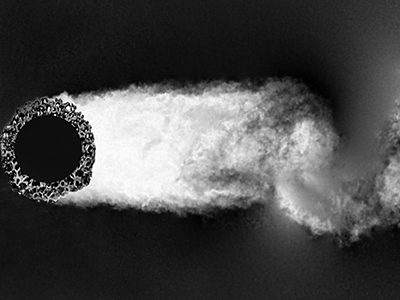
led by Prof. Dr. Olivier Chazot, revisits the thin regions where viscosity quietly governs aerodynamic performance.
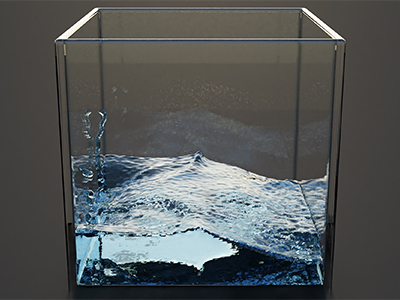
under the guidance of Prof. Dr. Miguel Mendez, explores of surface tension, wetting behavior, and the physics governing fluid-surface interactions.
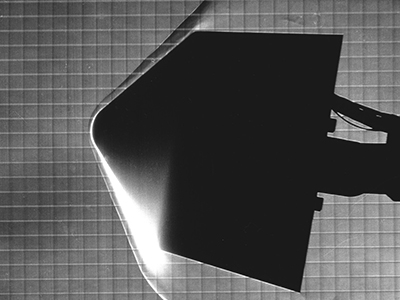
led by Prof. Dr. Guillaume Grossir, examines high‑speed flows, shock waves, and the complex dynamics of compressible regimes.
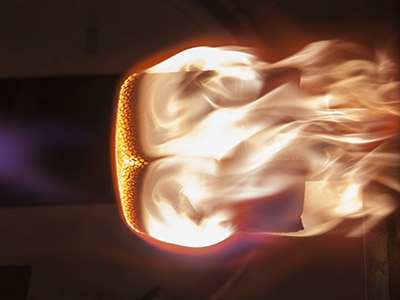
led by Prof. Dr. Olivier Chazot, introduces high enthalpy environments where thermochemical nonequilibrium and molecular dissociation dominate.
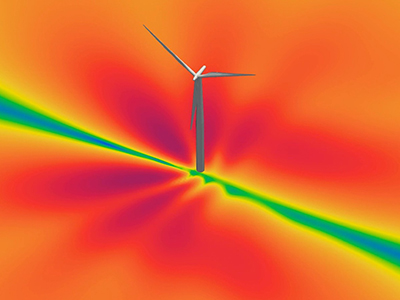
coordinated by Prof. Dr. Jeroen van Beeck, connects fluid mechanics and large scale atmospheric and oceanic processes.
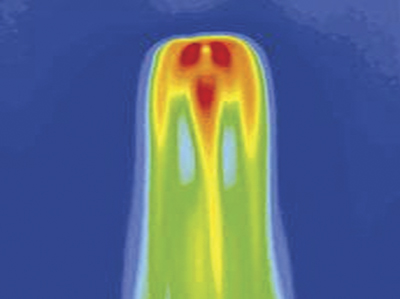
led by Prof. Dr. Olivier Chazot, illuminates mechanisms that trigger transitions from orderly motion to complex, unsteady behavior.
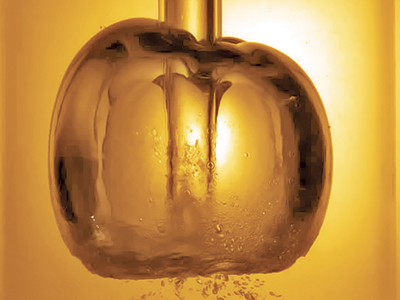
again guided by Prof. Dr. Jeroen van Beeck, presents flows involving interacting phases, interfaces, and inherently nonlinear dynamics.
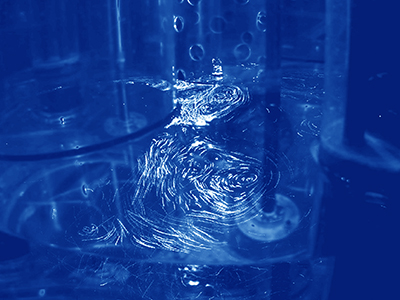
led by Dr. Lilla Koloszar, studies flows driven by temperature gradients and density variations in natural and engineered systems.
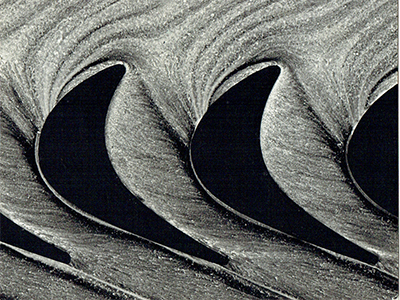
led by Prof. Tony Arts, visualizes the aerodynamics, thermal and unsteady flow features governing the complex flow in turbines.
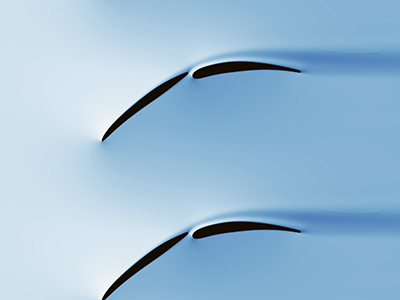
led by Prof. Dr. R. A. van den Braembussche and by Prof. Dr. Tony Arts, examines the aerodynamic and unsteady phenomena, also including optimization effects, experienced in compressors.
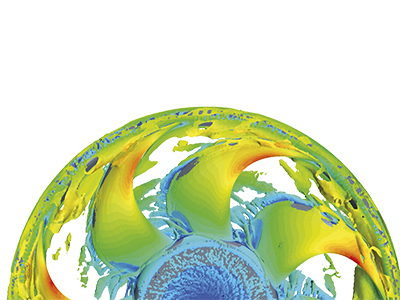
led by Dr. Lilla Koloszar, shows multiscale, chaotic, and structured nature of turbulence and its modelling challenges.
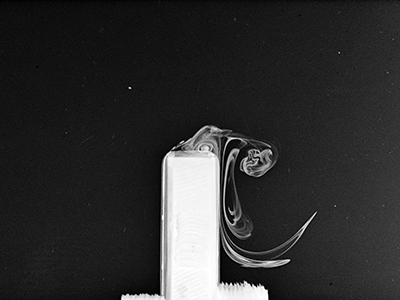
coordinated by Prof. Dr. Frank Eulitz, focuses on organized patterns and vortical motions that emerge within complex flows.
Under the leadership of Ir. Philippe Planquart, the editorial committee, whose work was made possible thanks to the essential support of Ms. Evelyne Crochard and Ms. Christelle Debeer, has produced more than a mere technical compendium.
They reflect the Institute’s enduring mission: to understand fluid motion not as a collection of isolated phenomena, but as a connected tapestry of physics, mathematics, and engineering. They also honor the people, students, researchers, professors, engineers, and staff, whose dedication has shaped VKI’s identity across seven decades. And they celebrate the aesthetic dimension of our discipline: the recognition that in studying fluids, we uncover not only the laws of nature but also the beauty embedded within them.
As we look toward the future, the challenges facing fluid dynamics are as urgent as they are inspiring: sustainable aviation, climate resilience, energy efficiency, space exploration, and the design of ever more sophisticated technologies. The von Karman Institute remains committed to addressing these challenges with the same spirit of innovation and international collaboration that has defined its history.
We offer this volume in celebration of seventy years of discovery, education, and scientific exchange. May it serve as both a record of what has been achieved and an invitation to the next generation of researchers who will carry forward the Institute’s legacy of excellence in fluid dynamics, where science and art continue to meet in motion.